
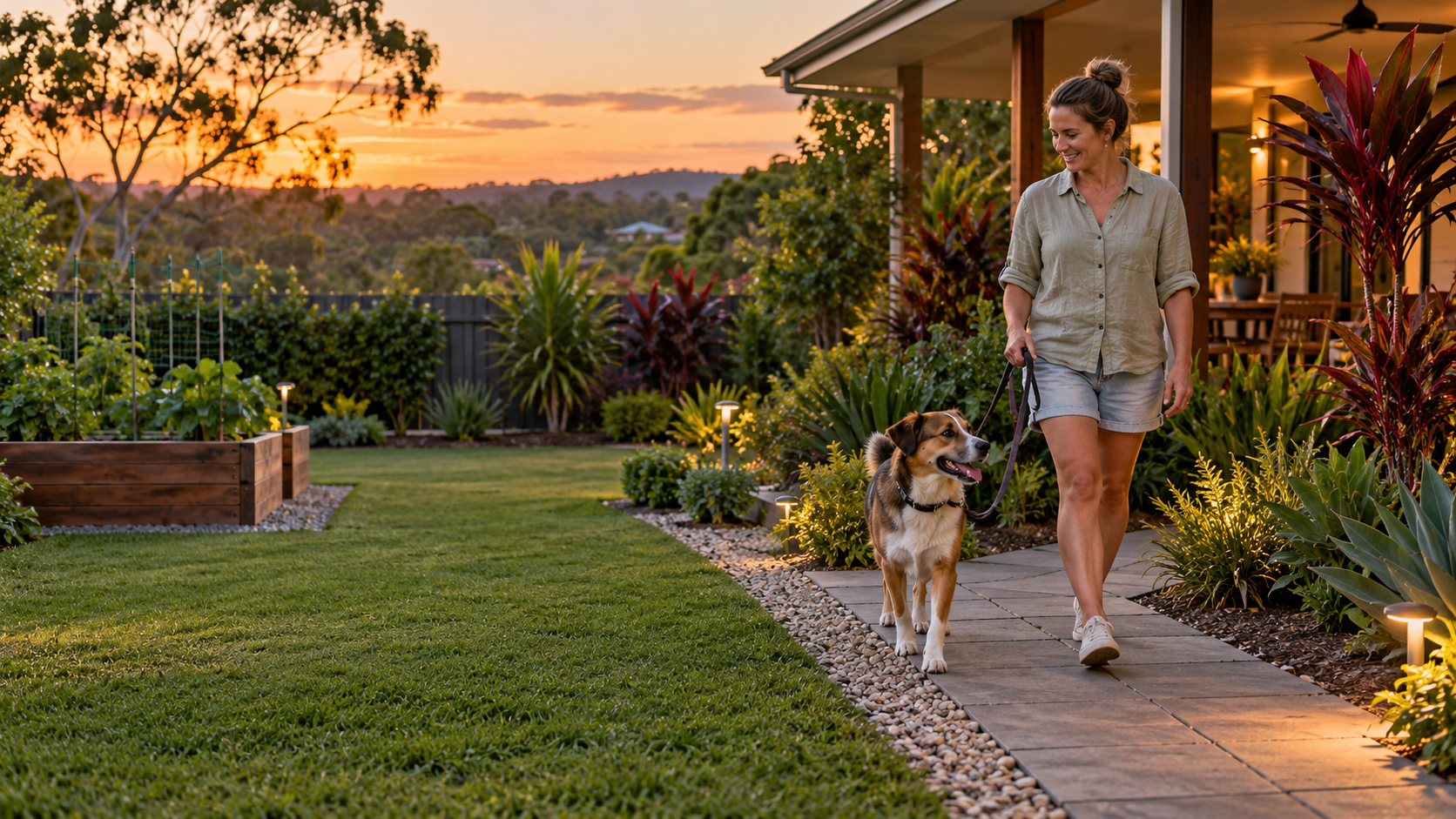
If you share your yard with dogs or cats in South East Queensland or Northern NSW, cane toads can pose a serious risk. The good news? A few practical landscaping choices can reduce the food, water and shelter available to them and make your garden easier to inspect. Here’s how to create a yard that suits our climate and helps keep your pets safer.
Landscaping works best alongside effective barriers, regular checks and pet supervision. No garden design can guarantee your pets won’t encounter a cane toad.
What draws cane toads to a garden?
Cane toads are opportunists. They seek:
- Water: accessible bowls, leaky taps, ponds and damp areas
- Food: insects attracted to outdoor lighting, as well as pet food left outside
- Shelter: shaded, moist hiding places beneath dense vegetation, stored materials and structures
Reducing these drawcards around pet areas is a useful starting point. You can also retain suitable habitat elsewhere in the garden for native wildlife.
Planting for fewer hiding places
There’s no established plant-based solution that reliably repels cane toads. Focus on structure, spacing and moisture management to make the areas your pets use easier to inspect.
- Choose upright, well-spaced plants near patios, kennels and pathways so you can see beneath them.
- Prefer locally suitable, drought-tolerant plants where appropriate. They can reduce the need for irrigation and help avoid persistently damp pockets.
- Keep lawns well-drained and maintained so cane toads are easier to spot.
- Manage heavy, matted groundcovers immediately around pet areas. If you love groundcovers, use defined beds with accessible borders.
- Prune selected lower branches where this improves visibility at ground level.
- Place herbs and vegies in raised planters. Well-designed beds can make watering, drainage and inspection easier, although they don’t exclude cane toads.
Native frogs also need moist shelter and groundcover. Avoid clearing every sheltered patch from your garden; focus your changes on the places your pets use most.
Choosing pet-friendlier plants
Native plants aren’t automatically safe for dogs or cats. Check the exact species for toxicity with your vet or a reputable animal poison resource before buying. Your local nursery can help identify plants and choose varieties suited to your soil and climate.
Control water and insects: redesign the buffet
Managing accessible water, outdoor food and unnecessary lighting can help reduce cane toad attractants.
- Fix dripping taps and irrigation leaks. Adjust sprinklers to avoid over-spraying and persistently wet areas.
- Keep pet drinking water in a location protected from toads. Bring bowls indoors overnight where practical, while ensuring pets always have access to fresh water. A raised bowl or paved verandah alone won’t exclude toads.
- Tip out unnecessary saucers, toys and buckets after rain. Keep gutters and drains clear so water doesn’t pool.
- Where appropriate, screen accessible drains and sumps. Ensure screens preserve drainage, remain accessible for cleaning and don’t interfere with the system’s operation.
- If you have a pond:
- Consider a continuous exclusion fence. Queensland Government guidance recommends fencing at least 50 cm high around native fish and frog ponds.
- Secure the bottom edge and close gaps around entrances.
- Check regularly for cane toads, eggs and tadpoles, confirming identification before removal.
- Provide safe escape routes for native wildlife, designed so they don’t create an easy entry route across the barrier.
- Don’t rely on steep internal edges, pumps or fountains to prevent cane toad entry or breeding.
- Rethink lighting. Use warm-colour lights with good shielding, aim them where needed and consider timers or motion sensors to reduce prolonged insect gathering.
Surfaces, borders and storage: make hiding harder
A tidy, manageable landscape makes daytime hiding places easier to inspect.
- Avoid unnecessarily deep, persistently damp mulch immediately beside pet areas. Retain suitable mulch elsewhere for healthy soil and plants.
- Define garden beds with clear borders. Where practical, add a narrow strip of gravel or river pebbles between lawn and beds to support drainage and make inspection easier. Gravel is a landscaping feature, not a reliable cane toad barrier.
- Choose gravel and paving that are comfortable for pets, including during hot weather.
- Lift and store items off the ground where practical, including timber, bricks and spare materials. Keep piles neat and accessible.
- Close access beneath steps, garden sheds and similar structures where appropriate. Check for wildlife before sealing spaces and preserve necessary drainage and ventilation.
- Keep compost tidy. Use a secure bin and manage food scraps.
Toad-resistant fencing and gates
Purpose-built barriers can reduce cane toad entry, especially around pet zones.
- Use a continuous barrier with an appropriate height and a surface or mesh designed to restrict toad passage.
- Secure the bottom edge against the ground so toads can’t easily pass underneath.
- Fit gates with suitable gap closures or tight thresholds, and close openings around service lines.
- Keep vegetation and stored objects from creating routes over the barrier.
- Inspect regularly for erosion, damage and new gaps.
- Around dog runs and other frequently used pet areas, consider a dedicated enclosed zone within your yard.
Small toads can fit through openings that exclude adults. Check for any toads already inside an enclosure before relying on it, and continue regular inspections.
Pet-safe zones and nightly routines
Simple habits help reduce encounters, particularly after rain and on warm, humid nights.
- Inspect the area before letting pets outside.
- Create an easy-to-check toilet area for dogs near the house and supervise evening visits.
- Use a torch or brief outdoor lighting to scan ahead. Keep dogs on a lead where needed.
- Feed pets indoors or pick up bowls straight after meals; don’t leave food out overnight.
- Train a “leave it” cue while continuing supervision.
- Store balls, tug toys and chewies off the ground when not in use.
- Restrict unsupervised access to ponds and water features.
- Prevent pets from investigating living or dead cane toads.
If you see a cane toad (and what to do for pets)
- Confirm identification. Native frogs can be mistaken for cane toads. If you’re unsure, seek identification advice before taking action.
- Handle safely. Wear gloves and place confirmed cane toads in a secure, ventilated container out of reach of pets and children.
- Choose humane options. Arrange professional removal or follow current RSPCA guidance. For adult cane toads, this specifies refrigeration at 4°C for 12 hours, followed—after confirming the toad is not moving—by freezing at −20°C for at least 24 hours. Confirm death before disposal. Never freeze a conscious toad directly or use cruel methods such as Dettol or drowning.
- Dispose of bodies securely. Dead cane toads remain toxic, so keep them away from pets and prevent animals from retrieving them.
If your dog or cat licks, bites or mouths a cane toad, contact a vet immediately.
If your pet is conscious and can be handled safely, use a wet cloth to wipe toxin from the gums, tongue, roof of the mouth and inside the cheeks. Rinse the cloth thoroughly between wipes. Keep the head angled down or to the side so fluid drains out.
Do not use a hose or force water into the mouth. If your pet is having seizures, is unconscious, cannot swallow or is struggling to breathe, do not attempt mouth cleaning—go straight to an emergency vet. Do not delay veterinary care to complete first aid or remove the toad.
Signs of poisoning can include drooling, pawing at the mouth, vomiting, wobbliness, tremors, seizures or difficulty breathing. Seek veterinary advice after suspected exposure rather than waiting for symptoms.
Need a hand?
Landscaping changes can support a broader cane toad management plan, and No More Toads can help you assess risks around the areas your pets use.
Get in touch to discuss humane removal, toad-resistant fencing and practical improvements suited to your home and garden.