

Cane Toad Tadpole Trapping
Stop Cane Toads Before They Leave the Water
Most cane toads in your yard start life as eggs and tadpoles in a pond, dam or creek nearby. Catch them at that stage and they never become toads that can reach your pets. We identify them, set the traps, and either show you how or take care of it all for you.
"Toads Are Gone, Pets Live On."
Why Tadpoles Matter
The biggest numbers are in the water, not on the lawn
One female cane toad lays around 35,000 eggs at a time. Most of the cane toads in any area at any moment are eggs and tadpoles, not the adults you see hopping around at night.
That makes the water the best place to break the cycle. Every school of tadpoles we remove is thousands of toads that will never make it onto your lawn, into your dog's water bowl, or near your cat.
Removing adults is still important, but if toads are breeding on or near your property, trapping the tadpoles stops the next wave before it starts.
35,000
eggs from a single female cane toad. A few good trapping sessions can remove thousands of tadpoles before one toad emerges.
The Cane Toad Breeding Cycle
Why timing matters
Stage 1
Eggs
24 hours to about a week
Laid in long, dark strings of jelly in shallow, still water. They hatch fast in warm weather, so let us know as soon as you spot them.
Stage 2: when we trap
Tadpoles
Around 3 to 20 weeks
Concentrated in the water and easy to target with a lure. Warm Queensland water can shorten this stage to around 4 weeks.
Stage 3
Toadlets and adults
Trapping window closed
Once they leave the water they spread across the yard. Already seeing tiny toads? You need our baby cane toad removal service.
Stage timings: Sunshine Coast Council cane toad life cycle information.
How to Spot Cane Toad Tadpoles
And why we do the identifying for you
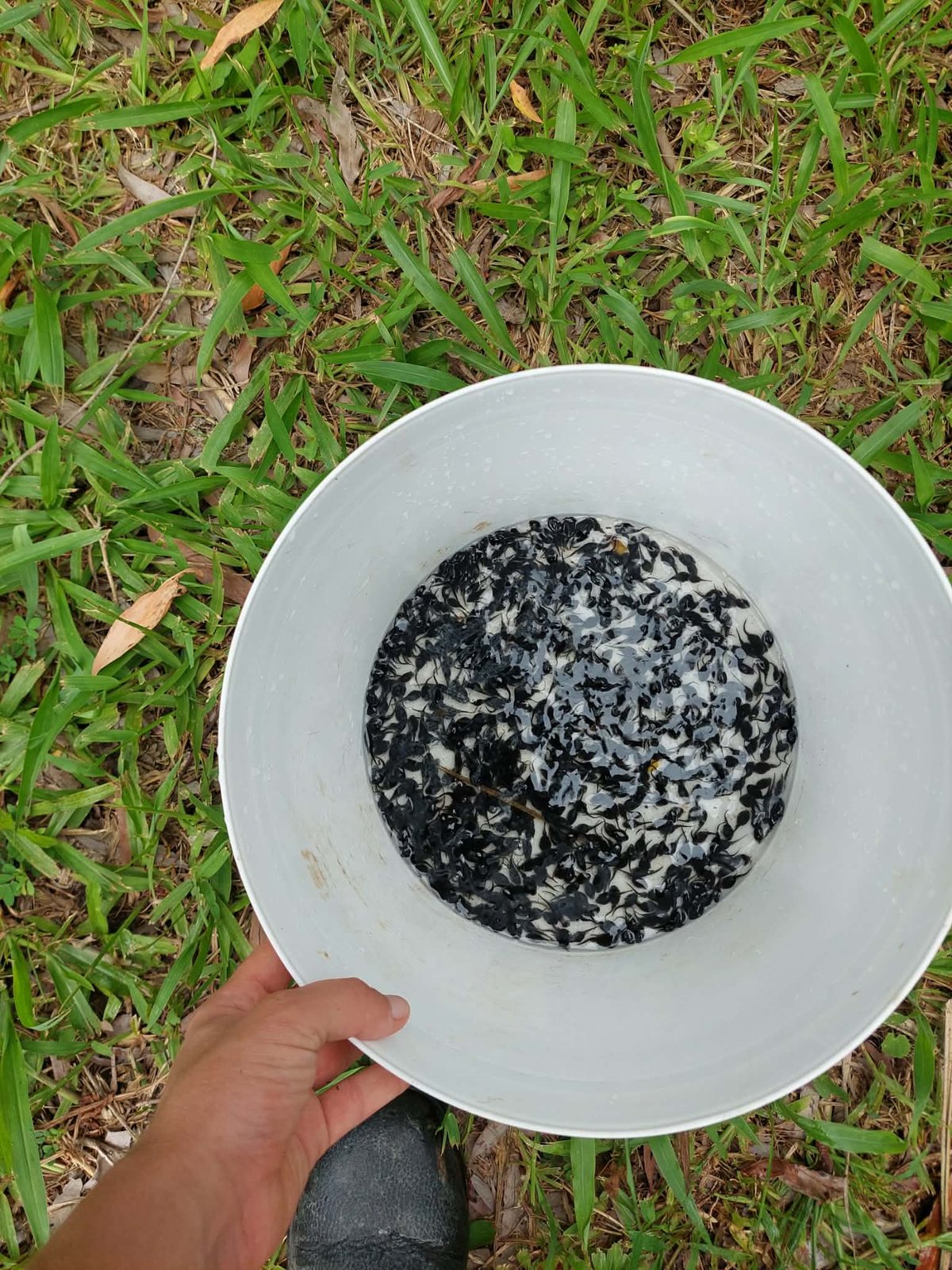
- Small and jet black, top and bottom, in daylight (colour is not reliable at night)
- Swim together in dense schools
- Usually found in shallow, still water near the edges
- Clear, see-through tail fin in good light
Where we find them on your property
Our Method: Watergum Traps and Pheromone Lures
Targets cane toad tadpoles only
We use the tadpole trap developed by Watergum, the Queensland environmental organisation behind some of the most effective community cane toad programs in the country. We work alongside Watergum, using the same trap and lure they developed with University of Queensland researchers.
Each trap carries a toad pheromone lure that releases a natural scent cue into the water. Cane toad tadpoles follow it straight into the trap. Native frog tadpoles are not attracted to it, so the trap works in mixed ponds and dams without harming the frogs you want to keep.
No chemicals go into your water, and the lure is safe in garden ponds, pools and livestock dams.
How trapping works in practice
Assess and position
We find where the tadpoles are gathering and set the trap in shallow water close by.
Load the lure
The pheromone lure goes inside the trap and starts drawing tadpoles in straight away.
Leave to work
The trap is left for 4 to 8 hours, or overnight where it suits. Tadpoles follow the scent in and stay there.
Remove and dispose
Captured tadpoles are removed and humanely disposed of, in line with best practice.
Three Ways We Help
Choose the level of help that suits you and your property
Training
We visit, confirm what is in your water, and show you how to set, check and empty the traps yourself. Ideal if you are happy to stay hands-on and want to know you are doing it right.
Deployment
We identify the tadpoles, choose the best spots and set the traps and lures for you. You keep an eye on them between checks, with clear instructions from us.
Full removal
We handle everything: identification, trapping, collection and humane disposal. Nothing for you to touch, and nothing left behind in your pond or dam.
Keeping Your Pets Safe
Trapping is one part of the plan
Every visit includes a quick walk through what we found, where toads are likely breeding, and what to watch for next season. The more you know, the easier it is to keep your dogs and cats out of harm's way.
Tadpole trapping works best alongside a couple of simple steps for the toads already on land:
Be ready for an emergency
If your pet ever mouths a toad, every second counts. Our Emergency Kit keeps what you need in one place.
See the Emergency KitClear the toads already here
Seeing adult toads or tiny toadlets around the yard? Our removal teams collect them safely and humanely.
Cane toad removal | Baby toad removalAct Early: Warm Weather and Rain Start the Breeding
Cane toads breed once the weather warms up and the rain arrives. Tadpoles can turn into toadlets in a matter of weeks, so the best time to call is as soon as you spot eggs or tadpoles, or before the season starts if you have had them before.
Common Questions
About tadpoles, timing and our service
How quickly do cane toad eggs hatch?
How long do cane toad tadpoles take to become toads?
How do I identify cane toad tadpoles?
What is the Watergum tadpole trap?
Can I manage the trapping myself?
How much does tadpole trapping cost?
When should I contact you about tadpoles?
Are the tadpoles dangerous to my pets?
What if the tadpoles have already turned into toadlets?
Seen Tadpoles in Your Pond or Dam?
Tell us a little about your water and what you have seen. We will get back to you with the right option for your property, whether that is training, deployment or full removal.
Get a tadpole trapping quoteProudly working alongside Watergum to reduce cane toads across Queensland and Northern NSW.